ILLUSTRATIVE PROJECT
A home, in a better light
The fictional brief starts with a connected living room, entry and dining area. The people imagined here want a comfortable place to read, a welcoming route in from the front door and light over the table when they sit down together. The room does not need a dramatic makeover. It needs a lighting conversation that follows the way the evening moves through the house.
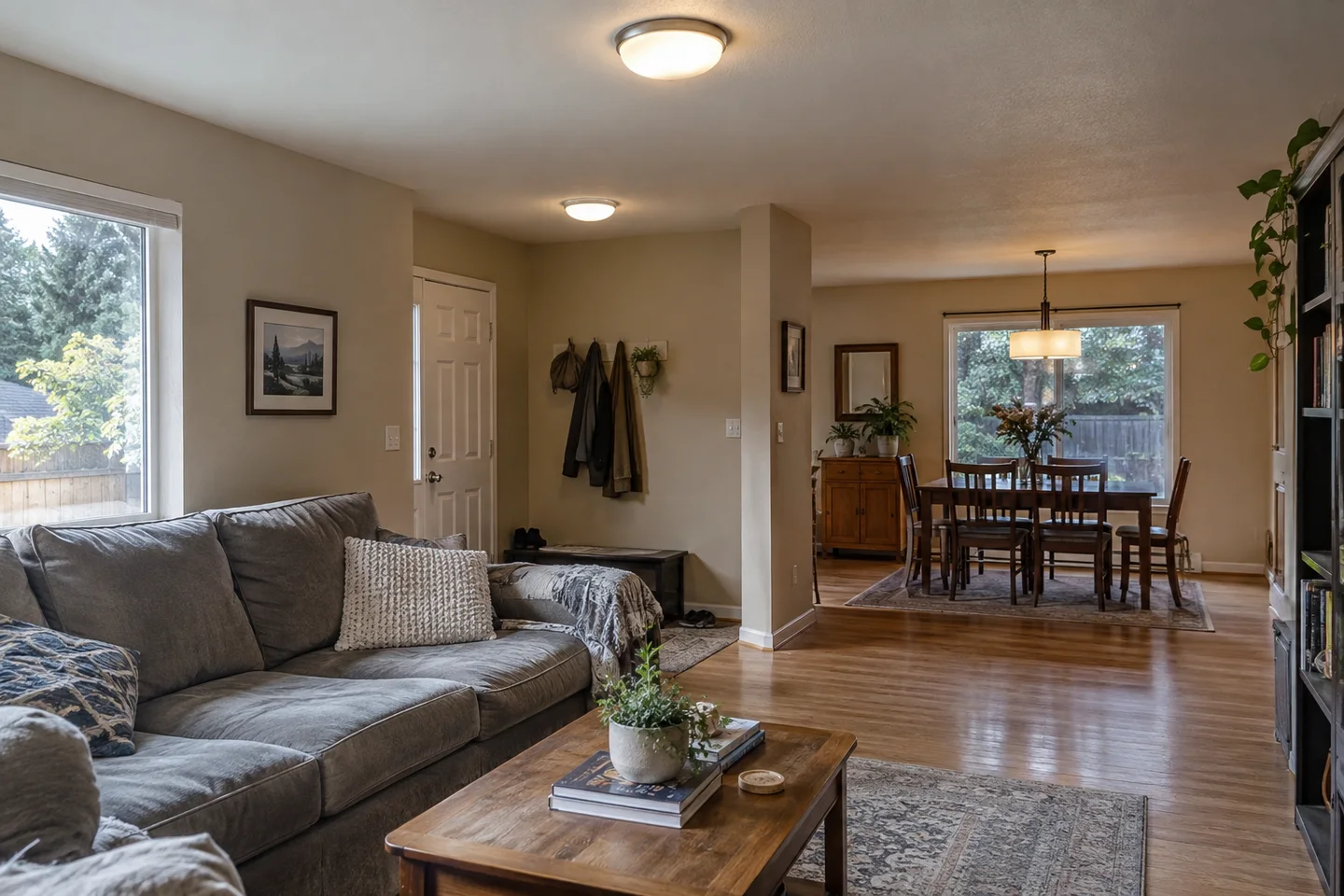
Illustrative home-lighting project. Fictional brief and AI-generated image; not completed work.
Start with an ordinary evening.
Picture the space as daylight fades. Someone settles on the sofa with a book while someone else sets the dining table. Later, a person comes through the front door carrying bags. The first design question is what each part of the room needs at those moments, followed by how the lighting can feel comfortable across the connected space.
Give each part of the room its own job.
This illustrative plan considers general ceiling lighting, the pendant over the dining table and the controls used on the way in and out. It also asks whether the reading spot needs another source of light; the image does not show that as an installed feature. Fixture choice, light appearance and control compatibility would be considered together.
In the living room
Consider where someone sits to read and how general lighting serves the rest of the room.
Over the table
Use the table position and sightlines to guide the pendant discussion.
At the entry
Think through which lights someone expects to control when arriving or leaving.
Make room for the house that is already there.
Before a real installation, an electrician would need to assess the existing wiring, controls, access and other site conditions. In this example, those are open design questions. The story does not assume that a new fixture can use an existing circuit or that walls can remain untouched.
The small decisions make the plan.
The fictional scope includes discussing the sofa position, the view toward the dining table and the controls someone reaches for at the entry. These details turn a broad request for better lighting into a conversation about the actual room. Budget, installation scope and any necessary approvals would still need to be agreed for real work.
Try the same starting point.
Choose residential in the sample request and describe a room you would like to improve. Use an invented example; the demo keeps your answers in this page and sends nothing.