ABOUT ANYTIME
Straightforward work. Clear conversations.
A project can start with a detailed drawing or a question about one room. Either way, the first step is understanding what you need the space to do.

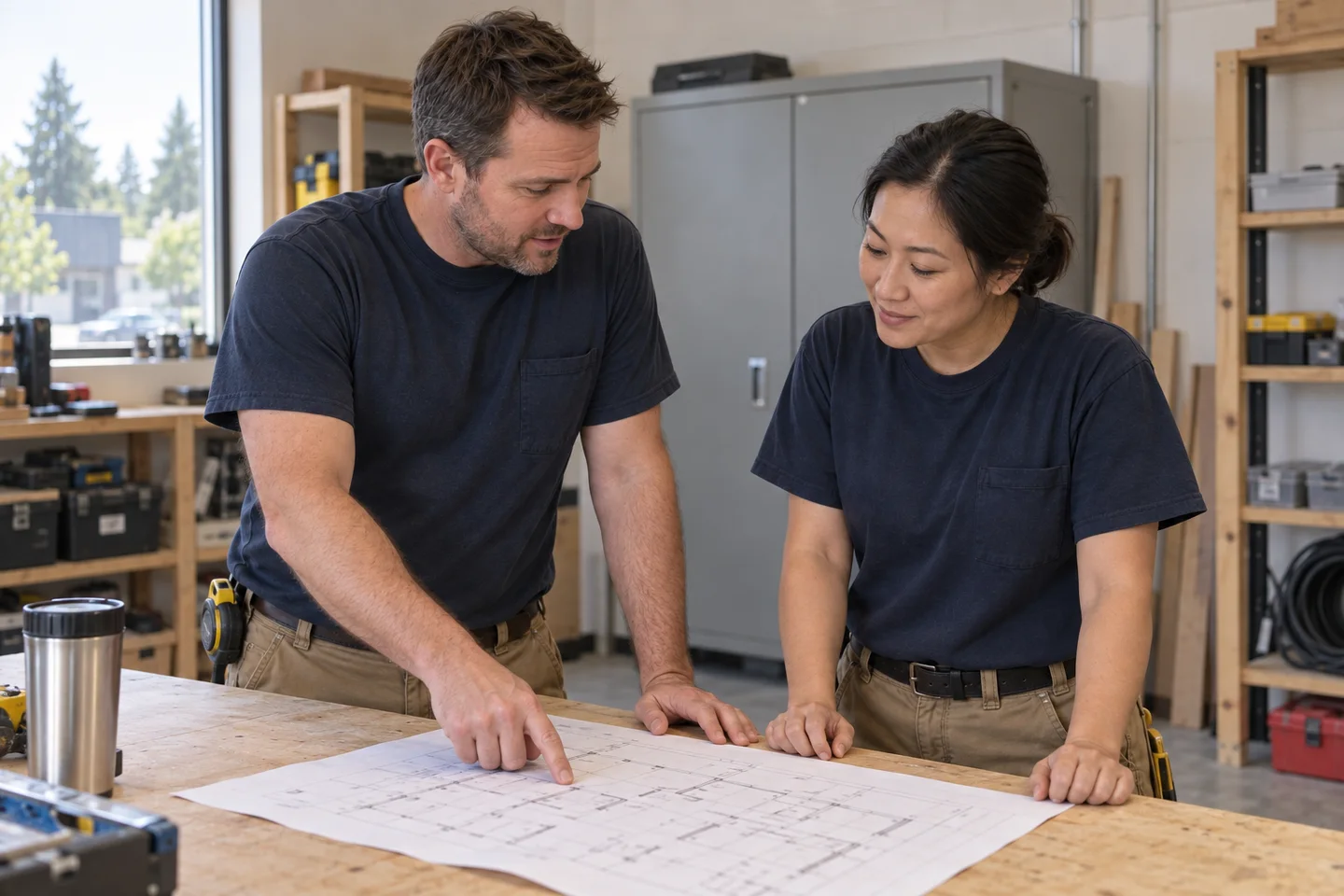
AI-generated crew portrait for a fictional business; not actual employees.
Useful work starts with listening.
A kitchen is a place to cook, talk and get the day going. A shop has customers out front and plenty happening behind the scenes. Electrical planning makes more sense when it starts with those ordinary routines, then works through the details.
You know the space. Start there.
You do not need the technical vocabulary to explain an idea. Describe what you want to change, what you use each day and what is still undecided. A practical conversation can turn those observations into questions worth answering.
Listen first
Begin with the purpose of the room and the reason for the project.
Think it through
Consider the layout, equipment and existing conditions together.
Make the scope clear
Identify the decisions, responsibilities and limits before treating a plan as settled.
Give the small decisions some attention.
A switch at the doorway. Light where you prepare dinner. Equipment that fits the way a workbench is arranged. These are the details behind a useful electrical brief, whether the project is a modest change or a building still on paper.
What are you working on?
Start with a short description of the space and what you would like to do differently. The sample request walks through the questions with no message sent or appointment booked.