RESIDENTIAL
Make home work a little better.
A brighter work surface. A room with a new purpose. Outlets considered alongside the furniture. Start with the way you want to use your home.
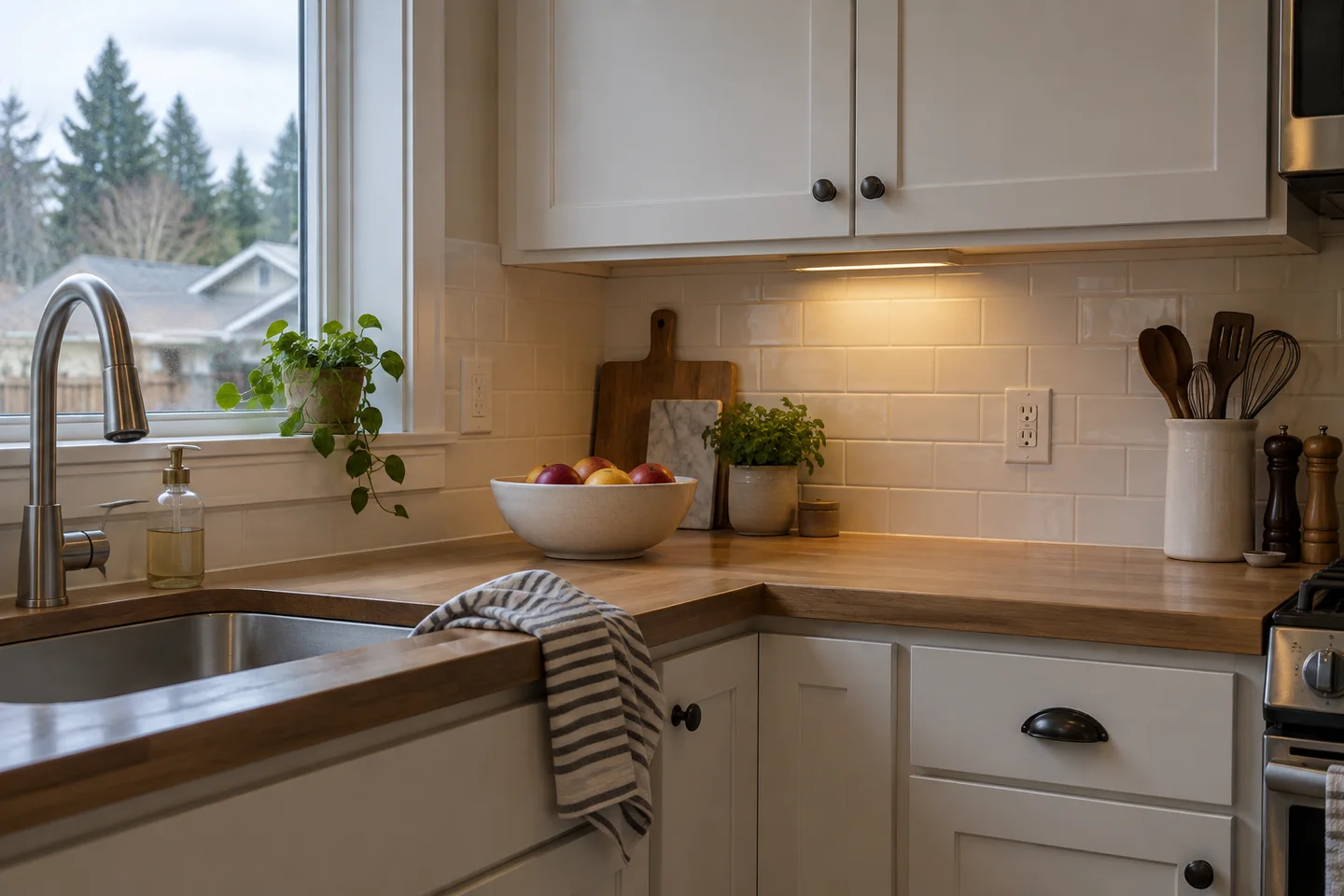
AI-generated imagery for a fictional business.
Room for useful improvements.
Start with the change you have in mind, then consider how the room will work around it.
Lighting and controls
Think about useful task lighting, comfortable evening light and where you expect the switches to be.
Outlets and everyday equipment
Bring the room layout and equipment choices into the discussion, including anything still undecided.
Remodels and changing rooms
Consider the electrical questions alongside cabinetry, furniture and the other work planned for the space.
The room tells part of the story.
For a real project, an electrician would also need to assess the existing installation and site conditions. A photo or room description can start a conversation, but it cannot establish what an installation needs.
Useful context
Which room is changing, how it is used and what you want to do differently.
Useful decisions
Known fixtures or equipment, likely furniture positions and the stage of any remodeling work.
A living room from afternoon to evening.
Explore a fictional brief that considers living-room reading, entry controls and light over the dining table.
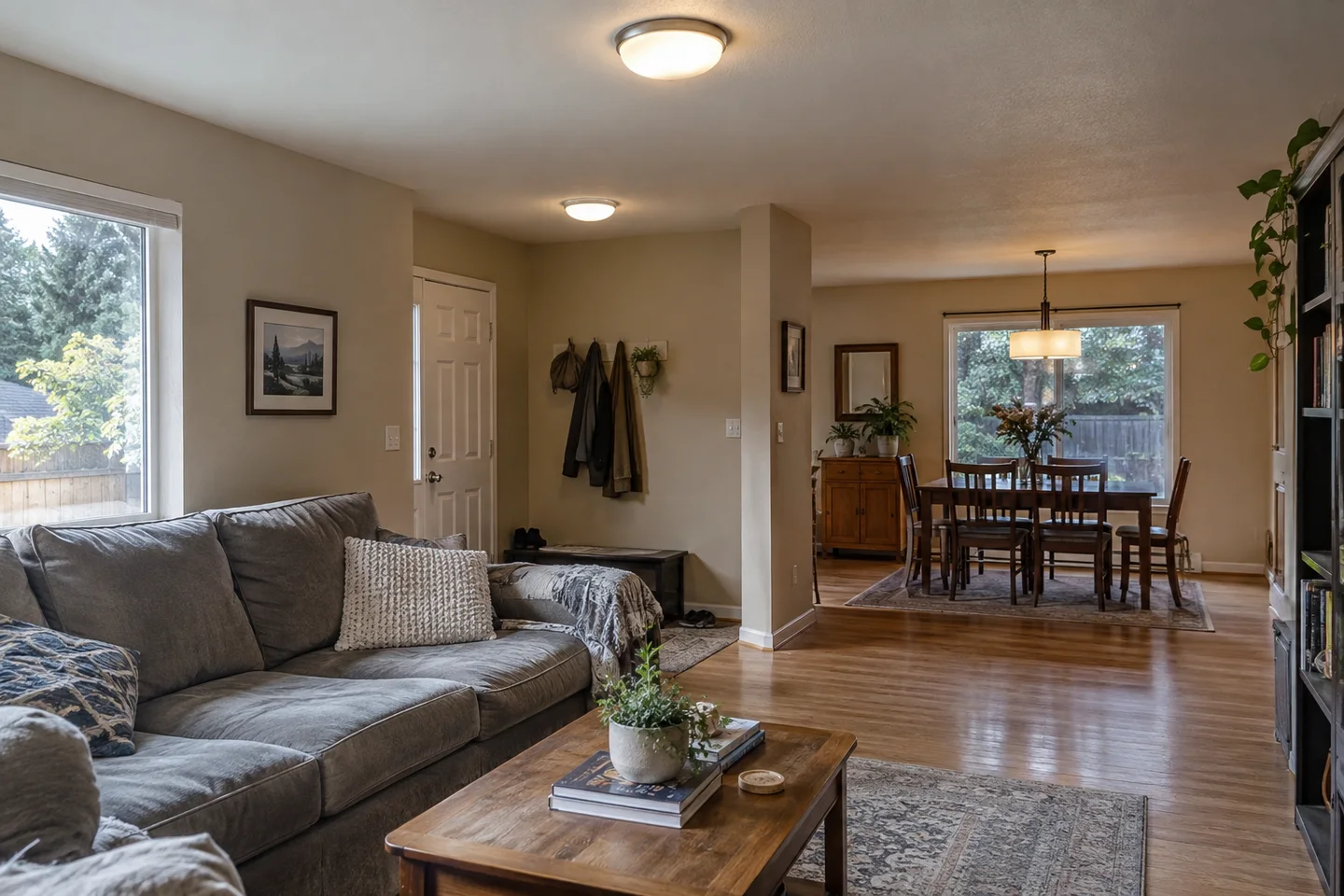
Illustrative home-lighting project. Fictional brief and AI-generated image; not completed work.
A few useful questions.
What details are useful at the beginning?
A short description of the space, what you would like to change and the stage of the project make a useful starting point. A room layout or equipment list can add context. Use invented details in this demo; a full address or private documents are unnecessary.
Will this calculate a price or tell me what work is needed?
No. The demo does not produce prices, diagnose electrical problems or define an installation scope. A real contractor would need to discuss the request and assess the relevant site conditions before proposing work.
Try describing a home project.
Use a made-up room and sample contact details. The flow shows the questions without sending an inquiry.